Flock : Geese :: Business : ___

freeweplay
Mar 10, 2026 · 7 min read
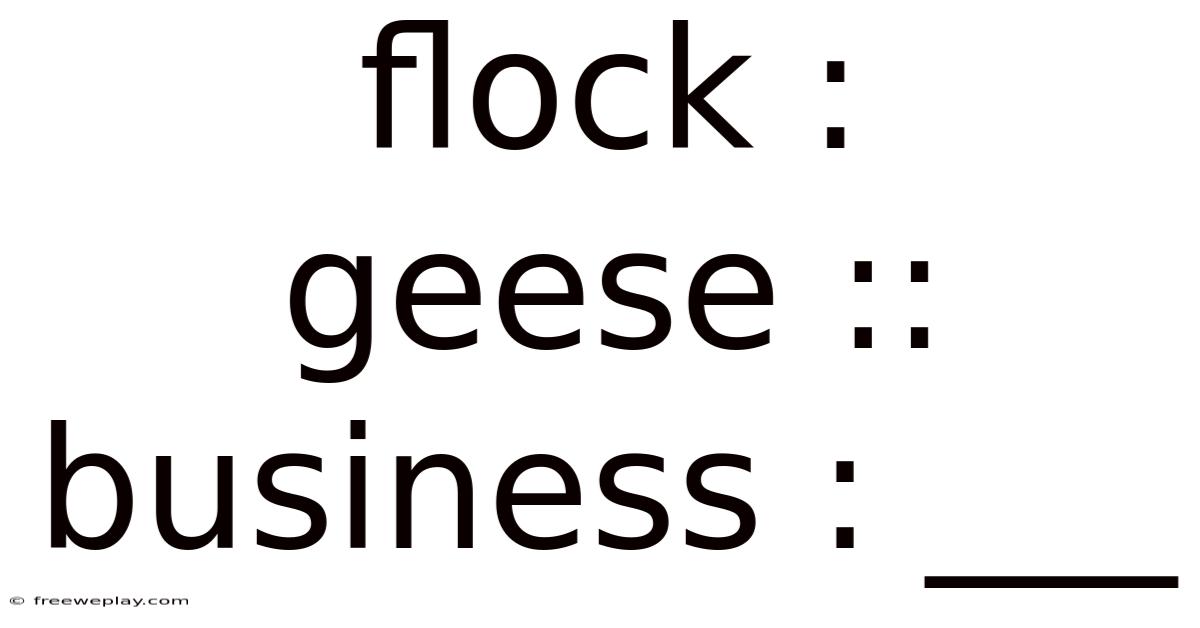
Table of Contents
The Power of "Flock: Geese" – Exploring the Business Parallel
In the world of business, understanding the dynamics of nature can offer profound insights. One such concept that has captured the attention of entrepreneurs, managers, and strategists is the term "flock: geese." At first glance, this phrase may seem simple, but it encapsulates a powerful metaphor that resonates deeply within organizational success. This article delves into the meaning behind "flock: geese," explores its relevance in business, and provides actionable strategies for applying these principles to real-world scenarios.
Introduction
The phrase "flock: geese" is more than just a vivid image—it represents a fundamental aspect of group behavior, leadership, and organizational success. In nature, geese form flocks to navigate, communicate, and protect themselves. Similarly, in the business world, understanding the dynamics of a group can be the key to achieving collective goals. This article will explore the deeper meaning of "flock: geese" and how it can be applied to business strategies, leadership, and team management.
By examining this metaphor, we uncover the importance of unity, communication, and adaptability in achieving long-term success. Whether you're leading a team or managing a company, the lessons from nature can be incredibly valuable. This comprehensive guide will break down the concept in detail, offering practical examples and insights that can transform your approach to business leadership.
The Meaning Behind "Flock: Geese"
The term "flock: geese" refers to the collective behavior of geese moving together in a coordinated manner. These birds are known for their ability to communicate through calls and maintain formation while migrating long distances. This natural phenomenon is not just about survival—it’s about efficiency, cooperation, and resilience.
In a business context, a flock symbolizes a group of individuals working together toward a common objective. Just as geese rely on their flock to navigate challenges, businesses thrive when their teams align with shared goals. The metaphor highlights the importance of unity, trust, and effective communication among team members.
Understanding the essence of a flock helps leaders recognize the value of collaboration. When employees feel connected and supported, they are more likely to contribute their best efforts. This article will explore how the principles of flocking behavior can be applied to enhance team performance and organizational success.
The Role of Communication in a Flock
Communication is the lifeblood of any flock. Geese use a variety of vocalizations to convey information about food sources, predators, and weather changes. This constant exchange of information ensures that the entire flock remains informed and coordinated.
In the business world, effective communication is equally vital. A well-functioning team relies on clear and open dialogue to share ideas, resolve conflicts, and make informed decisions. Without proper communication, misunderstandings can arise, leading to inefficiencies and missed opportunities.
The flock: geese metaphor emphasizes the need for transparent and consistent communication. Leaders must foster an environment where team members feel comfortable expressing their thoughts. This not only strengthens relationships but also enhances problem-solving capabilities.
Moreover, just as geese adjust their formation based on the environment, businesses must be flexible and responsive to changing conditions. Adapting communication strategies ensures that the team remains aligned with organizational goals, even in dynamic situations.
Leadership and the Art of Guiding a Flock
Leadership plays a crucial role in shaping the behavior of a flock. In nature, experienced geese take the lead, guiding their group with confidence and clarity. This leadership is not about control but about inspiring and empowering others to follow a shared vision.
In a business setting, effective leaders must embody the qualities of a skilled guide. They should demonstrate confidence, empathy, and the ability to motivate their team. By modeling the behavior they expect, leaders can foster a culture of trust and collaboration.
The flock: geese concept also highlights the importance of delegation. Just as geese rely on each other to cover more ground, teams must work together, leveraging individual strengths to achieve collective success. Leaders must empower their team members to take initiative while providing the necessary support.
This section will explore how leaders can apply the principles of flocking behavior to enhance their management style. By understanding the dynamics of a flock, business leaders can create a more cohesive and productive work environment.
Building Cohesion Through Shared Goals
One of the most powerful aspects of a flock: geese is the sense of unity it fosters. When geese move as a group, they are more resilient to external threats. Similarly, businesses that align their team around a common purpose are better equipped to navigate challenges and seize opportunities.
Setting clear, shared goals is essential for creating a strong sense of cohesion. When everyone understands the mission and their role in achieving it, they are more likely to work harmoniously. This section will discuss how to define and communicate these goals effectively, ensuring that every team member feels valued and motivated.
Additionally, celebrating collective achievements reinforces the idea of a united team. Recognizing individual contributions within the context of the group’s success strengthens relationships and encourages continued collaboration. This approach not only boosts morale but also reinforces the value of teamwork in business.
Adaptability and the Power of Flexibility
Nature is full of examples of how flocks adapt to changing environments. When faced with storms or food shortages, geese adjust their formation and movement patterns. This adaptability is crucial for survival and highlights the importance of flexibility in business.
In the corporate world, adaptability is a key trait for long-term success. Businesses that can quickly respond to market changes, technological advancements, and customer needs are more likely to thrive. The flock: geese metaphor reminds us that flexibility is not a sign of weakness but a strength.
To cultivate adaptability within a team, leaders must encourage innovation and open-mindedness. Providing opportunities for continuous learning and experimentation helps employees stay agile. This section will explore strategies for fostering a culture of adaptability and resilience in the workplace.
Real-World Examples of Flock Behavior in Business
Understanding the flock: geese concept is not just theoretical—it has practical applications in various industries. Let’s explore some real-world examples that demonstrate its relevance.
Case Study: A Tech Startup’s Team Dynamics
Consider a tech startup where a small team of developers, designers, and marketers work together to launch a new product. By adopting the principles of flocking behavior, the team can enhance communication, streamline workflows, and maintain a unified direction. Regular check-ins, collaborative tools, and shared objectives help the team stay aligned, much like a flock navigating through the skies.
This example illustrates how the flock: geese metaphor can be applied to modern business challenges. By emphasizing teamwork and adaptability, the startup can overcome obstacles and achieve its goals.
Example: A Manufacturing Company’s Supply Chain
In the manufacturing sector, a company may face disruptions in its supply chain. By forming a flock of interconnected teams, the organization can quickly identify bottlenecks, share resources, and respond to changes. This approach mirrors the coordinated movement of geese during migration, ensuring that the entire supply chain remains efficient and resilient.
This case study highlights the importance of collaboration in overcoming logistical challenges and maintaining operational excellence.
The Science Behind Collective Behavior
While the flock: geese metaphor is rooted in nature, it also aligns with principles from psychology and organizational behavior. Research in group dynamics shows that cohesive groups tend to perform better due to enhanced communication and shared responsibility.
The flock: geese model can be analyzed through the lens of social psychology, where individuals are more likely to follow the group when they feel connected. This phenomenon, known as social identity theory, underscores the importance of belonging and mutual support in achieving collective success.
Additionally, the concept of groupthink is relevant here. While it can lead to poor decision-making, fostering an environment where diverse perspectives are valued can prevent this. By encouraging open dialogue and critical thinking, businesses can harness the strengths of a cohesive team.
Understanding the scientific basis of the flock: geese metaphor provides a deeper appreciation for its relevance in the business world. It reinforces the idea that collaboration is not just a strategy but a natural human tendency.
Common Misconceptions About Flock Behavior
Despite its benefits, the flock: geese metaphor is often misunderstood. One common misconception is that it implies blind following without critical thinking. In
Building upon these insights, such collaborative approaches become essential for navigating complexities and achieving sustained objectives. A unified focus on teamwork and adaptability ultimately defines the organization's trajectory.
Latest Posts
Latest Posts
-
Longtime Childrens Clothing Store With A Portmanteau Name
Mar 10, 2026
-
Great Words That Start With O
Mar 10, 2026
-
Each Of The Letters In Egot
Mar 10, 2026
-
One Of The First Nations Nyt
Mar 10, 2026
-
Example Of A Symbolism In Literature
Mar 10, 2026
Related Post
Thank you for visiting our website which covers about Flock : Geese :: Business : ___ . We hope the information provided has been useful to you. Feel free to contact us if you have any questions or need further assistance. See you next time and don't miss to bookmark.
